


- von Daniel Pawlik
Living Room Rug Ideas – How to Choose the Right Size, Shape and Material
- von Daniel Pawlik
A rug is the piece of furniture nobody calls furniture – yet it works like one of the most important. It zones the space, warms the floor, softens acoustics and keeps bare feet warm on a Sunday morning. The right living room rug ties the whole scheme into one coherent story. The wrong one looks like a giant handkerchief stuck in the middle of the room.
At Pillovely we believe every detail says something about you – and a rug is one of the loudest voices in the room. This guide takes you through every decision: size, shape, material and placement around furniture, plus which rug to choose if you live with children or a dog. No theory – just practical advice.
Before you decide which rug to buy for your living room, stop at a few fundamentals. Each affects how the rug looks, how long it lasts and how much work it needs.
Five things to consider before you buy:
Browse our rugs – models in neutral shades (ecru, beige, olive) tend to work best with sofas.

Rug size decides everything. Most people buy a rug that is too small – it seems cheaper, lighter to carry and safer. And they almost always regret it.
Layout 1: the whole sofa on the rug (best). The rug is big enough for the whole sofa, the coffee table and at least 20–30 cm extra on each side. This creates a "living room zone" – everything on the rug belongs to one composition. Good practice in living rooms from about 18 m².
Layout 2: only the front legs of the sofa on the rug (compromise). The rug reaches under the front legs of the sofa – a good solution for medium-sized living rooms where a huge rug would be too much and a small one out of proportion.
Layout 3: rug only under the coffee table (smallest). A safe option for very small living rooms or when the sofa stands against the wall. The rug should be at least 30 cm wider than the coffee table on each side.
Whatever the layout, the rug should extend at least 20–30 cm beyond the sofa on each side. Less looks like an undersized mat. More (50+ cm) creates a "rug as the star" effect, ideal for Scandinavian and Japandi interiors.
This question comes up especially in open-plan homes where the living and dining areas share a space. The answer depends on the layout – and it is not always either/or.
In a living room with an open dining area, the best solution is two separate rugs, each defining its own zone:
This visually separates the zones and gives each part of the room its own character.
Follow one rule: the rug must be big enough for the chairs to stay on it with all four legs when pulled out. In practice:
The classic rule is 60–70 cm of rug around each side of the table. A chair whose back legs drop off the rug every time you pull it out is irritating every day.
In a purely relaxing living room the rug should be the centre of the seating area. Centre it on the sofa and coffee table rather than on the walls of the room – a subtle difference that dramatically changes how the room reads.
A living room with children means juice stains, biscuit crumbs and crayon marks. A living room with a dog adds hair, muddy paws and the occasional accident. When choosing a rug for a home with kids or pets, go for practicality and acceptance – the rug will be used, not just admired.
A living room rug for a home with children or a dog should have a subtle pattern or mixed colour. Pattern hides stains before you get to them. Muted mixes of beige, brown and warm grey win here – they do not show everyday mishaps.
Whatever the material, a non-slip rug underlay is a small cost that helps every day – the rug does not slide under children's feet, a running dog's paws or the sofa when you vacuum.

What size rug should I choose for my living room?
Ideally, the rug should extend at least 20–30 cm beyond the edges of the sofa. A rug that is too small upsets the proportions of the room.
Which rug material is easiest to clean?
Polypropylene is one of the most practical materials – stain-resistant, durable and easy to care for.
Does a round rug work in a living room?
Yes, especially in smaller rooms or with a round coffee table.
Which rug is best for a home with children or pets?
Short-pile rugs made from polypropylene, cotton or wool work best.
Should the rug go under the sofa?
Yes, it is the most recommended solution. It visually connects the sofa, coffee table and the rest of the seating area.
Which rug colour is the most versatile?
Beige, ecru, warm grey and olive are easy to match with most modern living rooms.
The best living room rug still looks good after a year – and even better after five, because it has become part of real life in your home.
Browse our rugs in natural colours (ecru, beige, olive, warm grey) – they get on best with the sofas in our range.
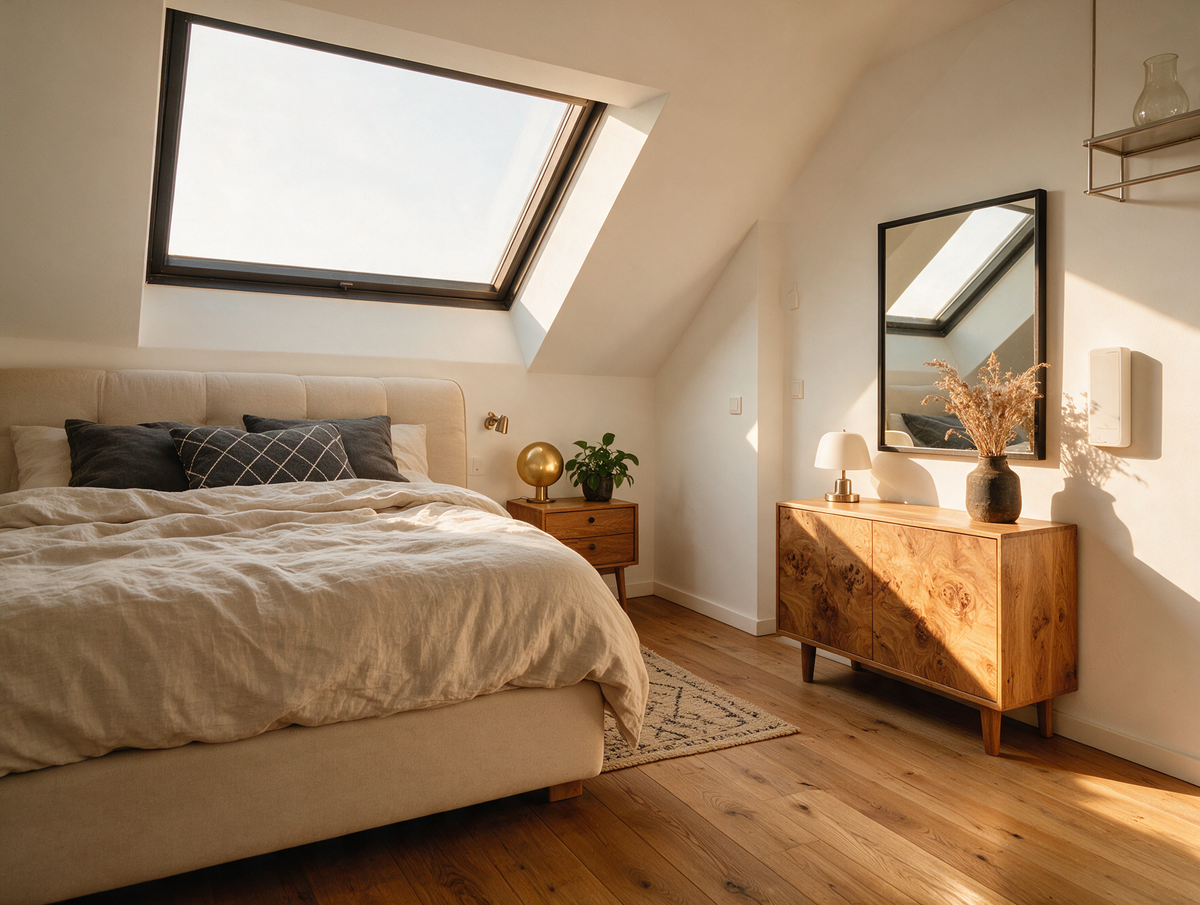
Schlafzimmer mit Dachschräge einrichten – wie nutzt man schräge Wände clever?
Ein Schlafzimmer mit Dachschräge hat einen ganz eigenen Charme. Schräge Wände, Holzbalken und Dachfenster schaffen eine Atmosphäre, die man in einem gewöhnlichen Zimmer kaum findet. Gleichzeitig stellt der Raum besondere Anforderungen: Der niedrige Kniestock schränkt die Stellfläche ein, und falsch gewählte Farben lassen das Zimmer schnell eng wirken. Gut geplant kann ein Schlafzimmer unter der Dachschräge jedoch zum gemütlichsten Raum im ganzen Haus werden – vorausgesetzt, Sie beginnen mit dem Bett, wählen anschließend niedrige Möbel und kümmern sich zum Schluss um Licht und Textilien.
Weiterlesenüber Schlafzimmer mit Dachschräge einrichten – wie nutzt man schräge Wände clever?
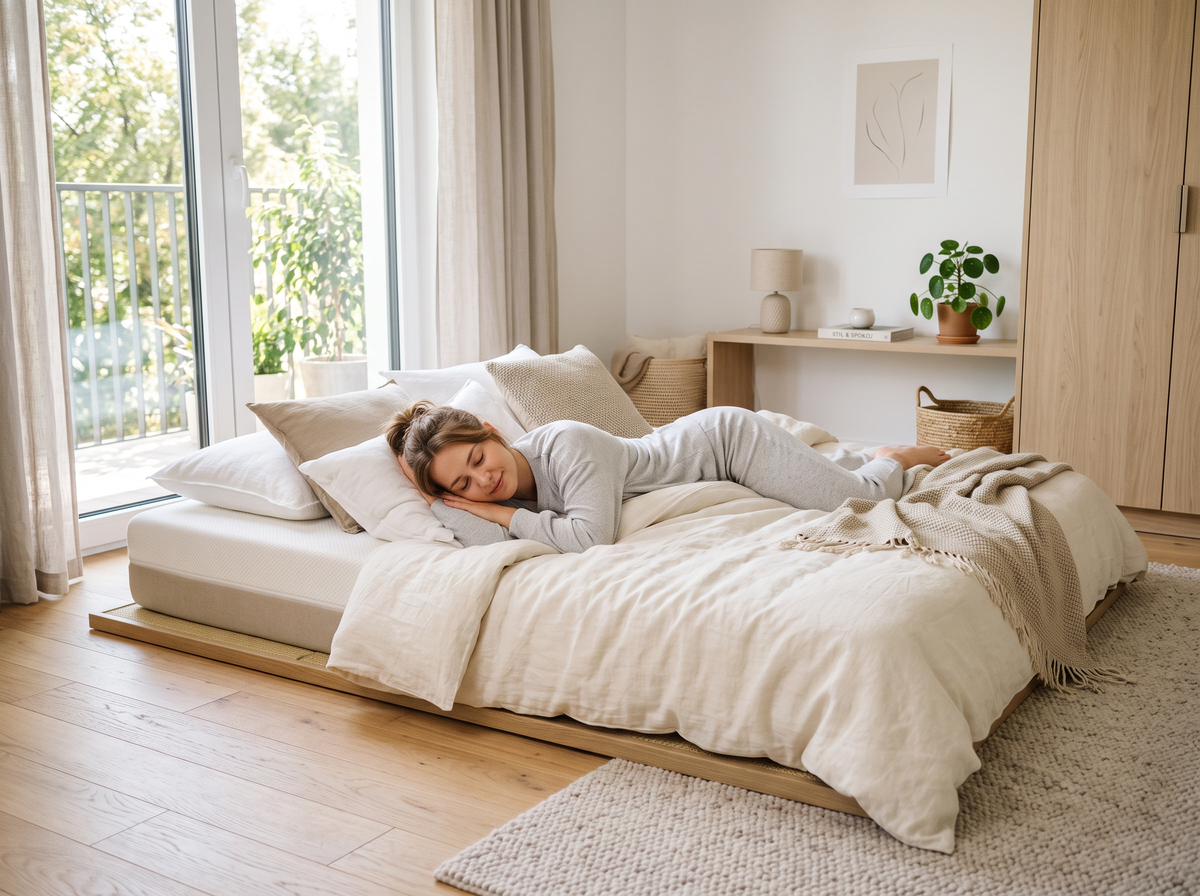
Kaltschaummatratze oder Federkernmatratze? Der Vergleich, der die Wahl erleichtert
Die Frage „Kaltschaummatratze oder Federkernmatratze?” gehört zu den häufigsten Entscheidungen beim Matratzenkauf. Beide Varianten können bequem sein, unterscheiden sich aber deutlich im Aufbau, im Liegegefühl, in der Belüftung und darin, für welche Schlafgewohnheiten sie besonders gut passen. Deshalb gibt es nicht die eine beste Matratze für alle. Entscheidend ist, wie Sie schlafen, wie Ihr Körper auf Druck reagiert, ob Ihnen nachts schnell warm wird und welches Bettgestell Sie verwenden.
Weiterlesenüber Kaltschaummatratze oder Federkernmatratze? Der Vergleich, der die Wahl erleichtert
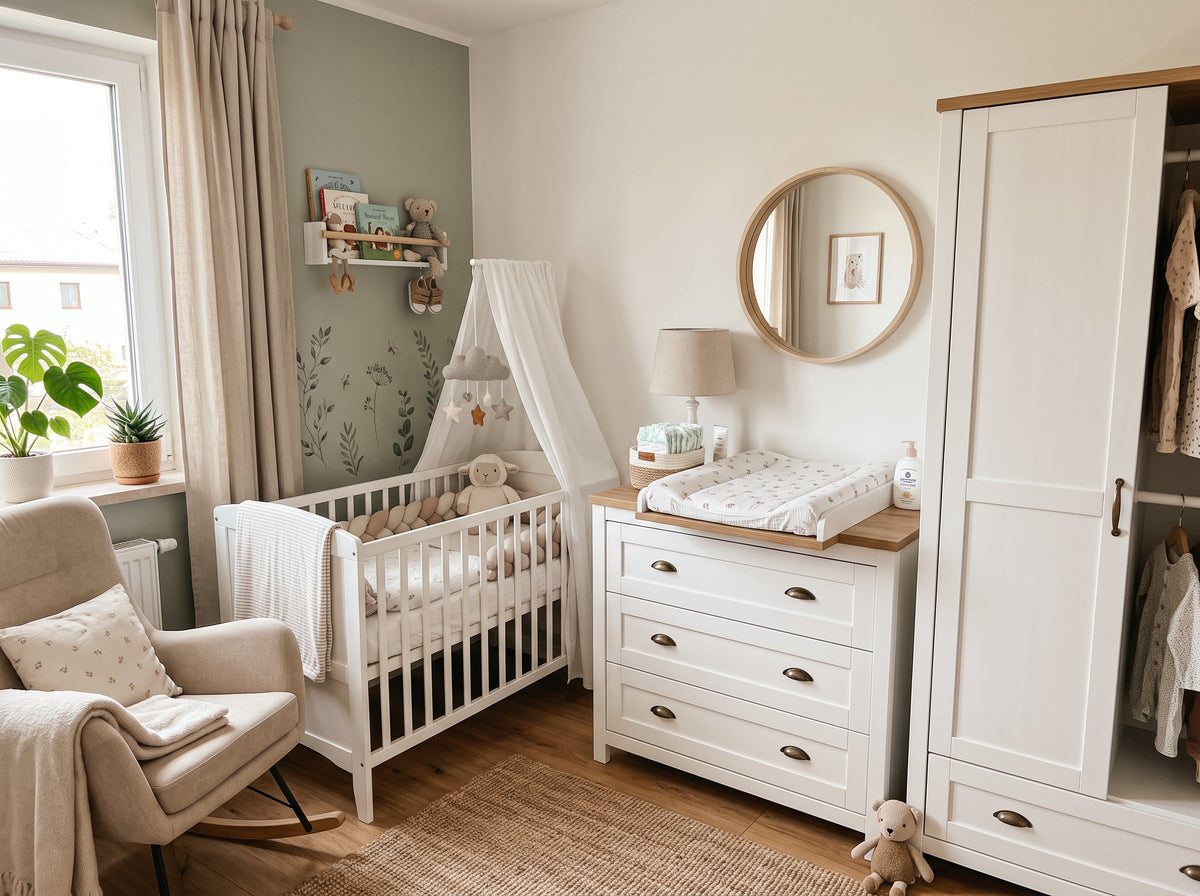
Babyzimmer einrichten - wie gestaltet man ein sicheres und gemütliches Zimmer fürs Baby?
Ein Babyzimmer einzurichten bedeutet nicht, den Raum mit möglichst vielen Möbeln und Dekorationen zu füllen. Viel wichtiger ist eine ruhige, sichere und gut organisierte Umgebung, die den Alltag mit Baby erleichtert. Am Anfang braucht ein Baby vor allem einen geschützten Schlafplatz, eine praktische Wickelzone, Stauraum für Kleidung und Pflegeprodukte sowie eine angenehme Atmosphäre. Alles andere kann nach und nach ergänzt werden, wenn klarer wird, wie der Raum tatsächlich genutzt wird.



Teilen:
Esszimmerstühle – So wählen Sie die perfekten Stühle für Ihren Esstisch
Osmanische Hocker – Was ist das und wie verwendet man sie im Wohnzimmer?