


- von Daniel Pawlik
Étagère – What Is It and How to Choose the Perfect Open Shelving Unit
- von Daniel Pawlik
Remember grandma's flat? The light, multi-tiered shelf in the corner of the living room holding a porcelain figurine, a few leather-bound books and a vase of wild flowers? That was an étagère – a piece of furniture that has quietly returned to modern interiors and feels right at home. On one hand it smells of nostalgia and warmth; on the other it fits perfectly into minimalist schemes where space and lightness matter.
In this guide we explain what exactly an étagère is, where to put it, how to choose the right material for your style and how to arrange books and decorations so it is not just open shelving but a real design feature.
The name comes from the French étagère – a multi-level open shelf designed to display small items such as porcelain, books and ornaments. The first étagères appeared in 19th-century drawing rooms and later became a staple of 70s and 80s homes – narrow, wooden and placed against the wall in the front room.
Today the étagère is enjoying a second youth. Why? After years of heavy, closed bookcases, we are rediscovering the charm of light structures that do not overwhelm a room. Open levels "breathe" – they let light flow through and let the eye rest on the wall behind. This is especially valued in small flats and in Scandinavian, boho, Japandi and modern vintage interiors.
How is an étagère different from an ordinary bookcase?

In everyday use, an étagère is a helper that combines storage with display. You can keep favourite books, plants and photo frames on it – or whatever really defines you: vinyl from your student days, a collection of ceramic mugs, herbs in pots.
Where does an étagère work best?
Checklist before you buy:
In smaller flats, one tall étagère often works better than two low ones – you use the full height of the room. For more ideas, see our space-saving furniture guide.
The material defines the character of the piece more than anything else. The same room will look completely different with an oak étagère than with a black metal one.
Wooden étagère – a classic that never goes out of fashion. Oak, ash, walnut or pine add warmth and timelessness, suiting Scandinavian, mid-century, rustic and classic interiors. Solid wood costs more but ages beautifully, developing a patina over the years.
Metal étagère – the choice for industrial, loft and modern interiors. In black, white or brass it looks light even when the structure is solid. It goes perfectly with glass, concrete and dark fabrics, and is often combined with wooden shelves, which soften the industrial feel.
Glass étagère – the queen of small spaces. Toughened glass shelves make the unit almost disappear, making the room look bigger. Great for glamour, Art Deco and modern interiors, but it needs more frequent cleaning and care – we do not recommend it for homes with small children.
Rattan or wicker étagère – the answer for lovers of boho, coastal and natural styles. Wicker, rattan and bamboo add texture and warmth. It looks great in a bedroom, conservatory or bright living room full of plants – but it is lighter and will not carry a heavy book collection; it is more decorative than practical.
Books are still one of the most common uses for an étagère – but not every one is up to it. Check:
How to style an étagère so it looks like a photo, not a storeroom:
An étagère looks best when you treat it as your own mini gallery – a place where you tell your story, not someone else's.

What is the difference between an étagère and a bookcase?
A bookcase usually has a back panel, more shelves and greater capacity. An étagère is lower and open, and is mainly decorative – although taller models handle books well too.
Is a glass étagère safe in a home with children?
Toughened glass is strong, but with small children a wooden or metal structure is less fragile and more stable.
What size should an étagère for books be?
The ideal shelf depth is 25–30 cm, with at least 30 cm between shelves. For large books choose deeper, taller models, ideally with adjustable shelves.
Does an étagère suit a small flat?
Yes, and it often works better than a classic bookcase. The open structure does not overwhelm the space, and a tall, narrow model uses valuable vertical space.
How do I care for a wicker étagère?
Dust with a soft brush, wipe with a damp cloth every few months and let it dry completely. Keep it out of full sun and damp rooms – wicker likes dry, airy spaces.
How do I stop a tall étagère from tipping over?
Most models come with a wall bracket. For units over 150 cm this is not optional but essential – especially in homes with children and pets.
An étagère does more than you might think – it organises space, adds character and lets you display what really matters to you. Explore the Pillovely collection for furniture that lets your interior say something truly personal.
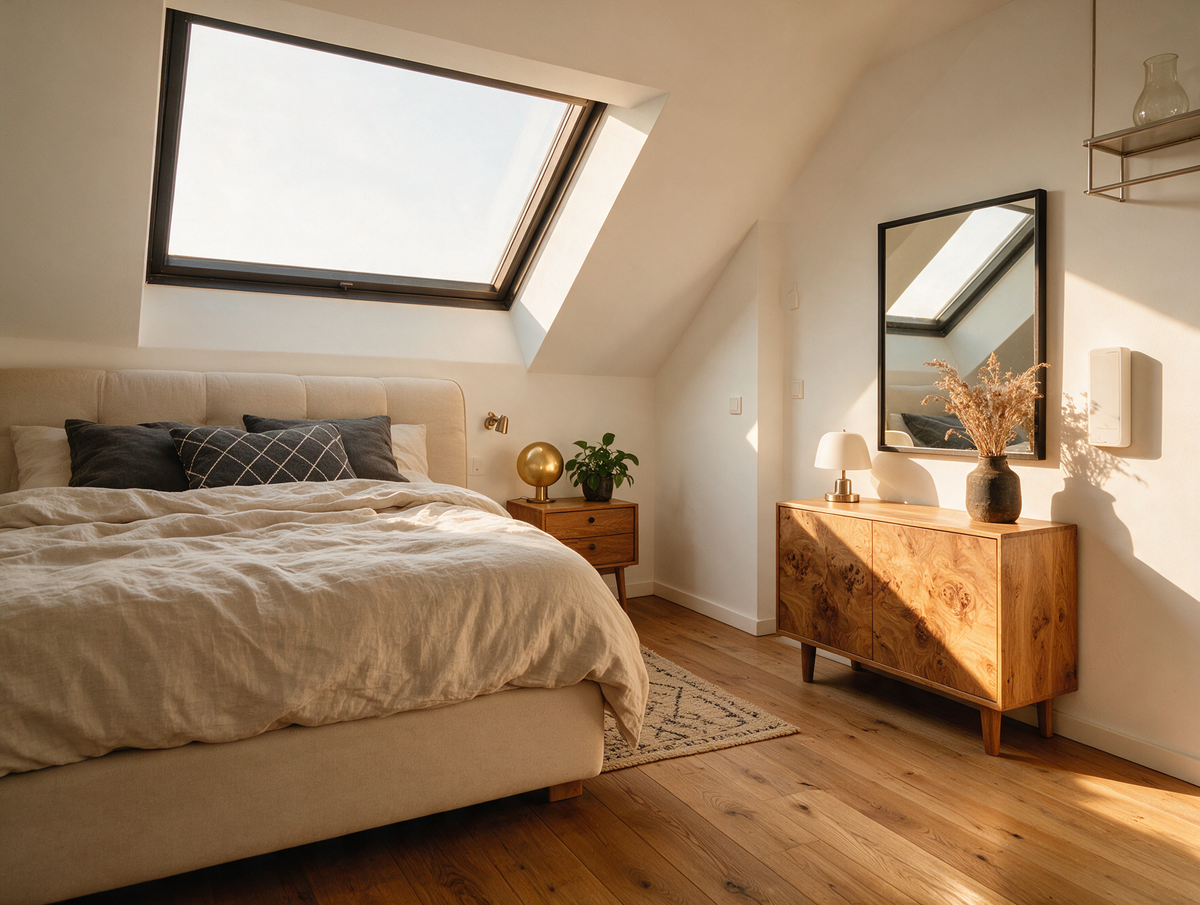
Schlafzimmer mit Dachschräge einrichten – wie nutzt man schräge Wände clever?
Ein Schlafzimmer mit Dachschräge hat einen ganz eigenen Charme. Schräge Wände, Holzbalken und Dachfenster schaffen eine Atmosphäre, die man in einem gewöhnlichen Zimmer kaum findet. Gleichzeitig stellt der Raum besondere Anforderungen: Der niedrige Kniestock schränkt die Stellfläche ein, und falsch gewählte Farben lassen das Zimmer schnell eng wirken. Gut geplant kann ein Schlafzimmer unter der Dachschräge jedoch zum gemütlichsten Raum im ganzen Haus werden – vorausgesetzt, Sie beginnen mit dem Bett, wählen anschließend niedrige Möbel und kümmern sich zum Schluss um Licht und Textilien.
Weiterlesenüber Schlafzimmer mit Dachschräge einrichten – wie nutzt man schräge Wände clever?
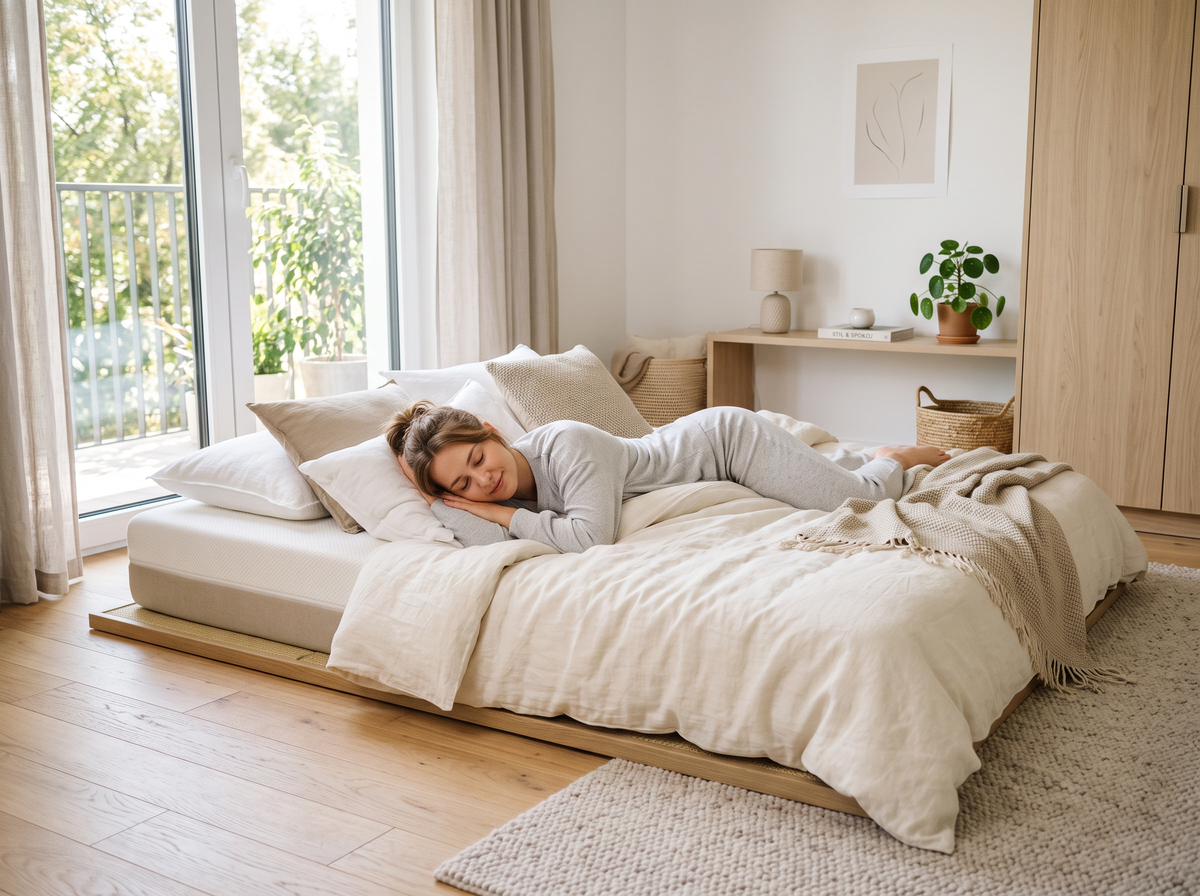
Kaltschaummatratze oder Federkernmatratze? Der Vergleich, der die Wahl erleichtert
Die Frage „Kaltschaummatratze oder Federkernmatratze?” gehört zu den häufigsten Entscheidungen beim Matratzenkauf. Beide Varianten können bequem sein, unterscheiden sich aber deutlich im Aufbau, im Liegegefühl, in der Belüftung und darin, für welche Schlafgewohnheiten sie besonders gut passen. Deshalb gibt es nicht die eine beste Matratze für alle. Entscheidend ist, wie Sie schlafen, wie Ihr Körper auf Druck reagiert, ob Ihnen nachts schnell warm wird und welches Bettgestell Sie verwenden.
Weiterlesenüber Kaltschaummatratze oder Federkernmatratze? Der Vergleich, der die Wahl erleichtert
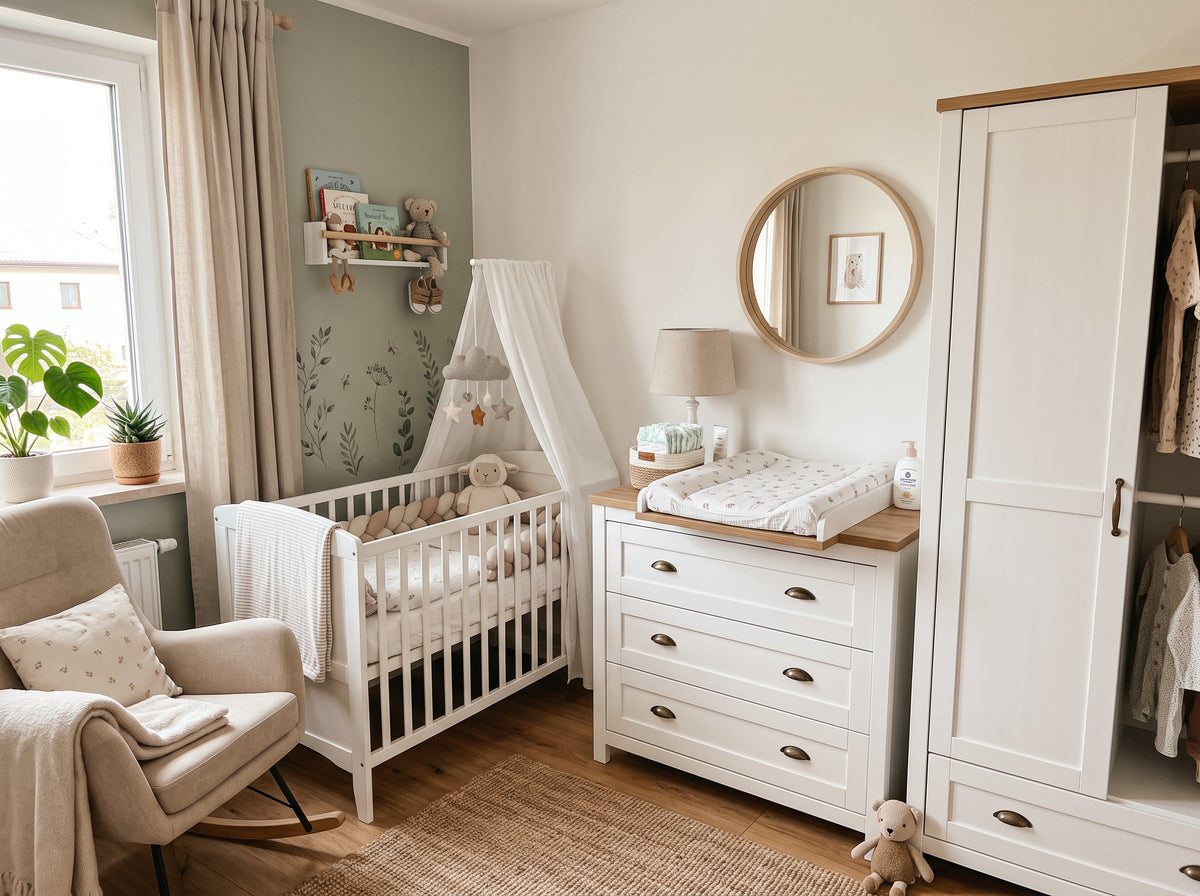
Babyzimmer einrichten - wie gestaltet man ein sicheres und gemütliches Zimmer fürs Baby?
Ein Babyzimmer einzurichten bedeutet nicht, den Raum mit möglichst vielen Möbeln und Dekorationen zu füllen. Viel wichtiger ist eine ruhige, sichere und gut organisierte Umgebung, die den Alltag mit Baby erleichtert. Am Anfang braucht ein Baby vor allem einen geschützten Schlafplatz, eine praktische Wickelzone, Stauraum für Kleidung und Pflegeprodukte sowie eine angenehme Atmosphäre. Alles andere kann nach und nach ergänzt werden, wenn klarer wird, wie der Raum tatsächlich genutzt wird.



Teilen:
Welche Farbe passt zu einem braunen Ledersofa? Stilvolle Wohnzimmerideen & perfekte Kissenkombinationen
Family Sofa – Finden Sie das perfekte bequeme und langlebige Sofa für Ihre ganze Familie